Technology
FDM is one of the most affordable 3D printing methods, using plastic filament as its base material. With the filament melted and extruded through a heated nozzle, this technology builds three-dimensional objects layer by layer. FDM is often chosen for early prototypes, simple products, or low-cost prints.
Applications
FDM is widely used for its simplicity and low production cost. Here are some of the most popular FDM applications:
-
Product Prototypes
Early-stage models for testing form and function.
-
Functional Designs
Printing objects with enough strength and durability for everyday use.
-
Engineering Components
Printing spare parts for engineering needs with specific requirements.
-
Hobby & Education
Often used in learning, experiments, and DIY projects.
Advantages
-
Low Cost
An economical choice for various printing needs.
-
User-Friendly
Suitable for both beginners and professionals.
-
Material Variety
Supports many filament types such as PLA, PETG, ABS, TPU 95A, and more.
-
Scalability
Suitable for large prints or simple models.
Comparison with SLA
| Aspect | FDM | SLA |
|---|---|---|
| Print Precision | Medium | Very High (Micron Detail) |
| Surface Finish | Rough | Smooth |
| Material | Filament (PLA, ABS) | Resin |
| Production Speed | Fast | Medium |
| Surface Finish | Textured | Smooth |
| Material | Plastic | Resin |
Design Guidelines
| Feature | Recommended Size |
|---|---|
| Minimum build size | 5x5x5mm or 10x2x2mm |
| Maximum build size | 250x250x250mm |
| Minimum wall thickness | 1.0mm (for 5x5mm object) |
| Small embossed detail | 0.4mm |
| Small engraved detail | 1.0mm |
| Minimum clearance (static) | 0.12mm |
| Minimum clearance (moving) | 0.2mm |
| Thread pitch design | 1.0mm |
| Minimum hole diameter | 1.5mm |
| Minimum column diameter | 2.0mm (max height 4.0mm) |
| Two sided overhang | 10mm |
| One sided overhang | 3mm |
| Overall tolerance (< 100mm) | ±0.3% |
| Overall tolerance (> 100mm) | ±0.4% |
Materials
FDM supports a variety of filament types designed to print objects with unique characteristics. Here are the most commonly used FDM materials:
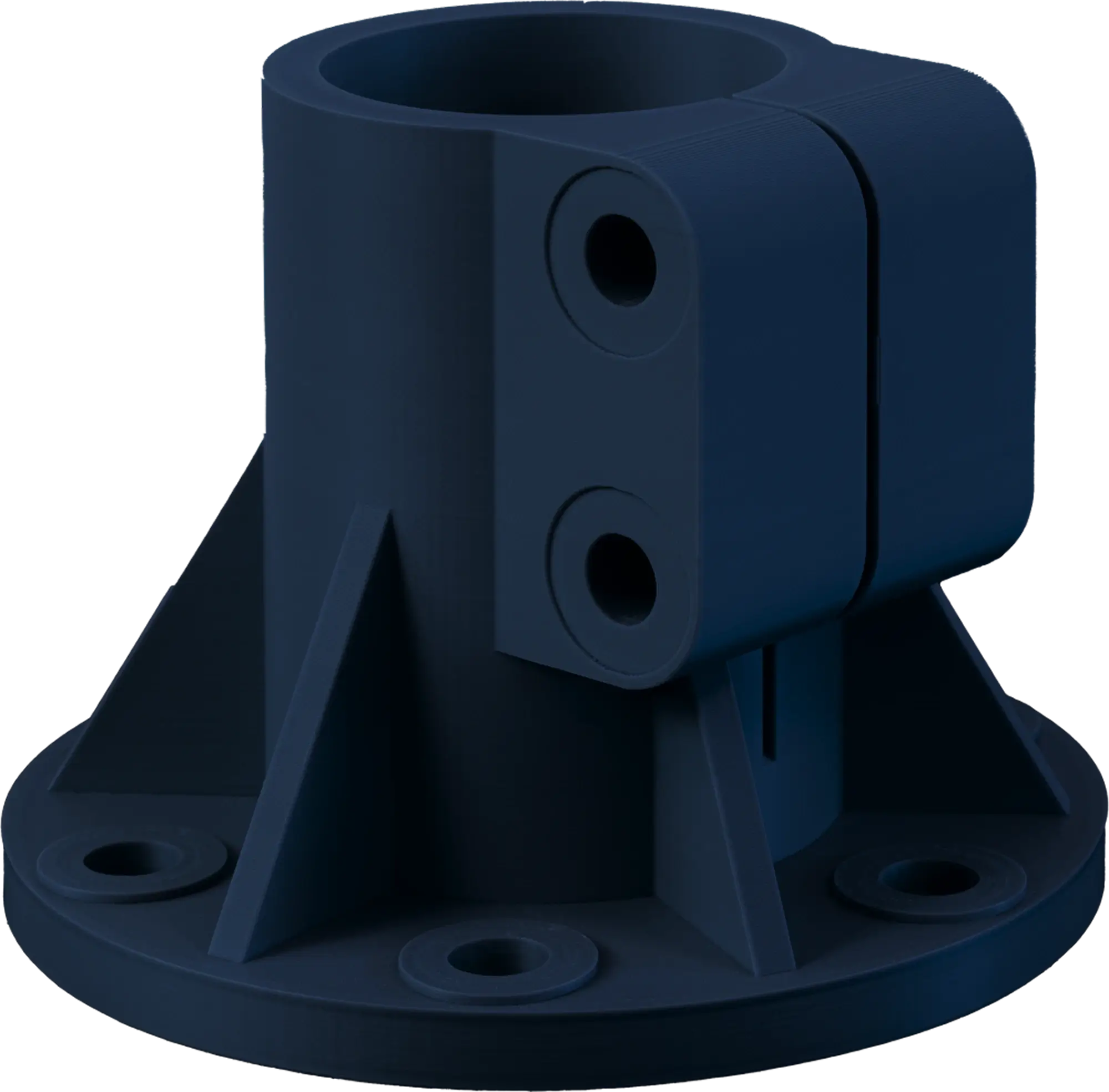
Acrylonitrile Butadiene Styrene (ABS)
An engineering plastic based on a copolymer of three main monomers: Acrylonitrile, Butadiene, and Styrene
Strength
Flexibility
Durability
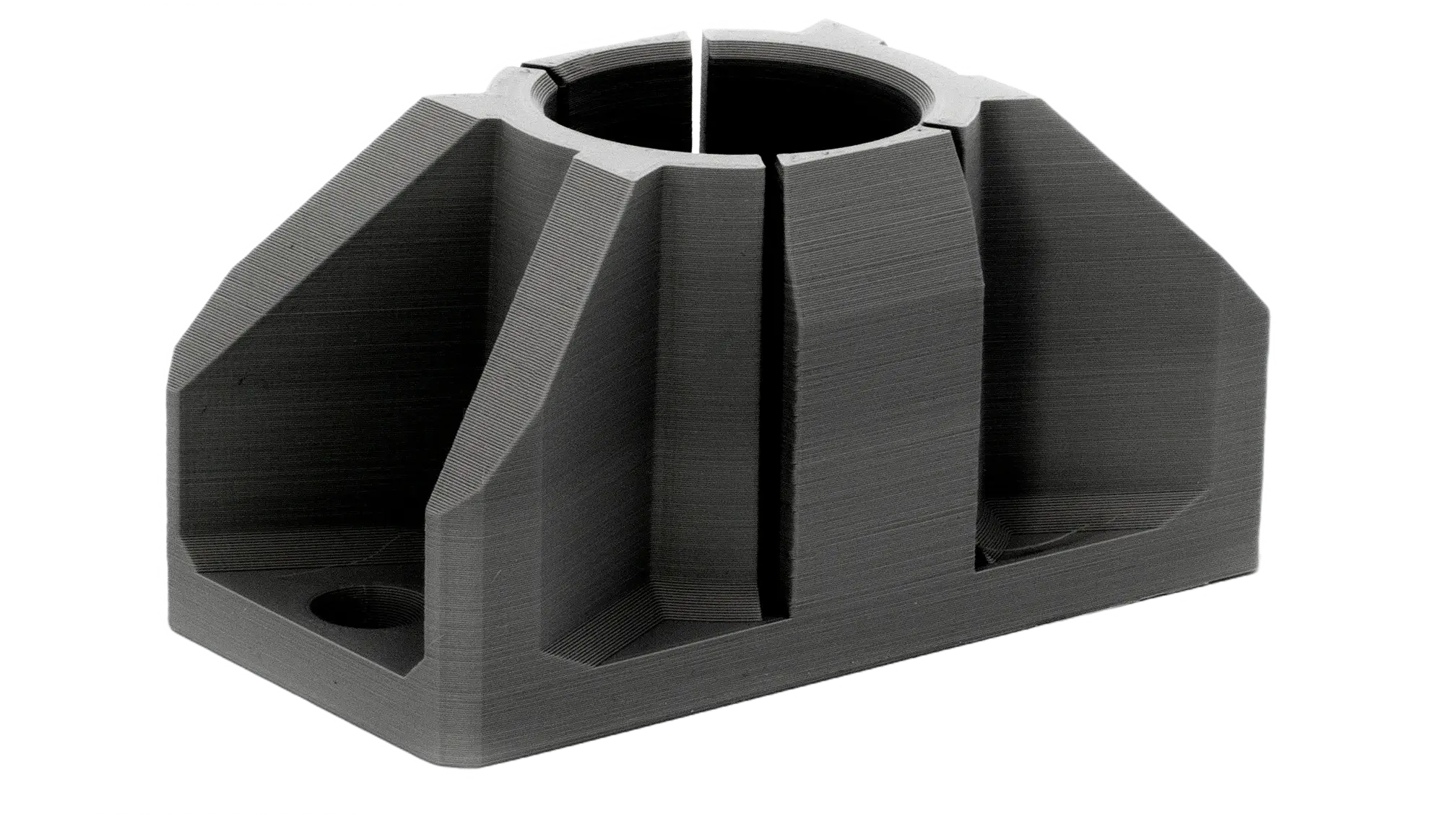
Acrylonitrile Styrene Acrylate (ASA)
A copolymer consisting of acrylonitrile, styrene, and acrylate with excellent mechanical properties and outdoor durability
Strength
Flexibility
Durability
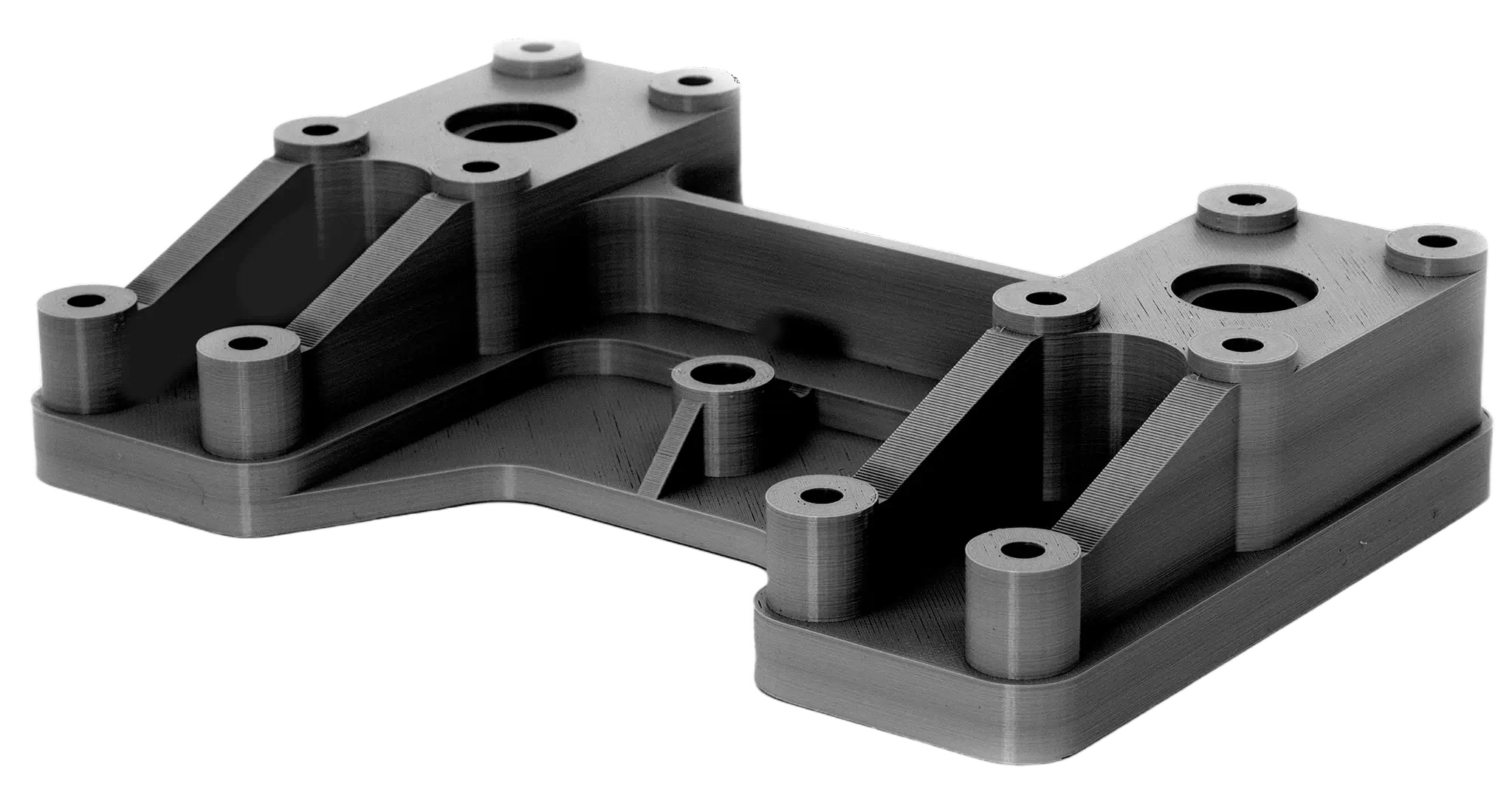
Enhanced Polycarbonate (ePC)
A thermoplastic made from BPA with a strong carbonate chain structure, has high impact strength and extreme temperature resistance
Strength
Flexibility
Durability
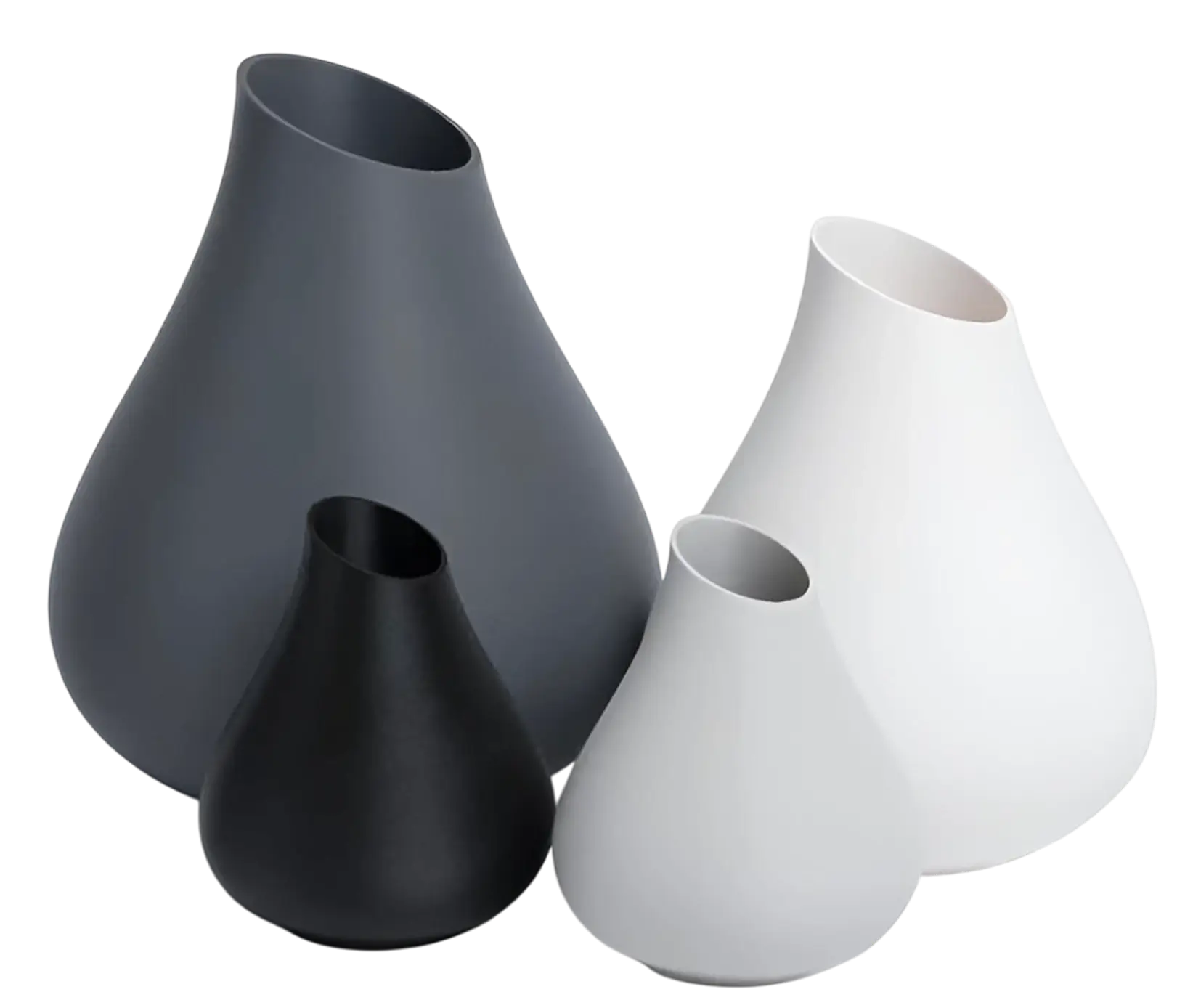
Polyethylene Terephthalate Glycol (PETG)
Modified thermoplastic from PET with added glycol to improve its printability, strength, and heat resistance
Strength
Flexibility
Durability
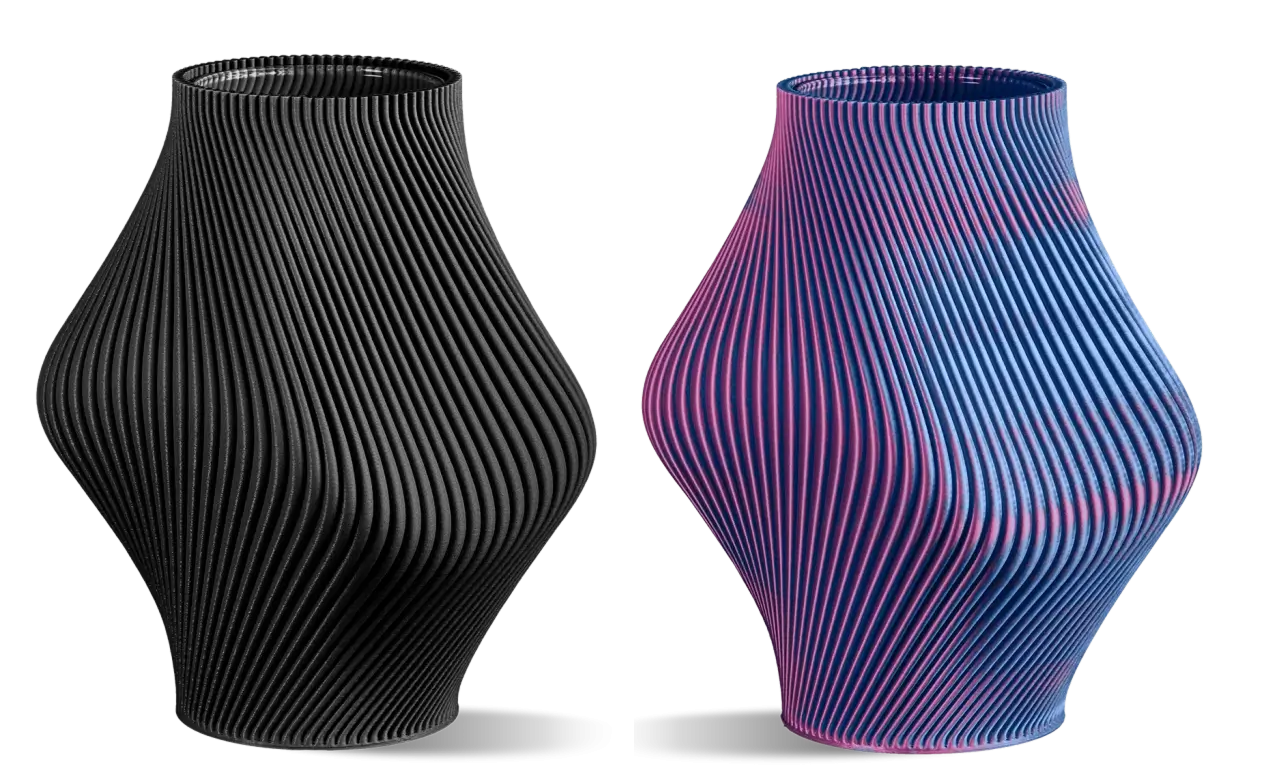
Polylactic Acid (PLA)
Bioplastics made from renewable sources such as corn or sugarcane starch, considered a biodegradable material
Strength
Flexibility
Durability
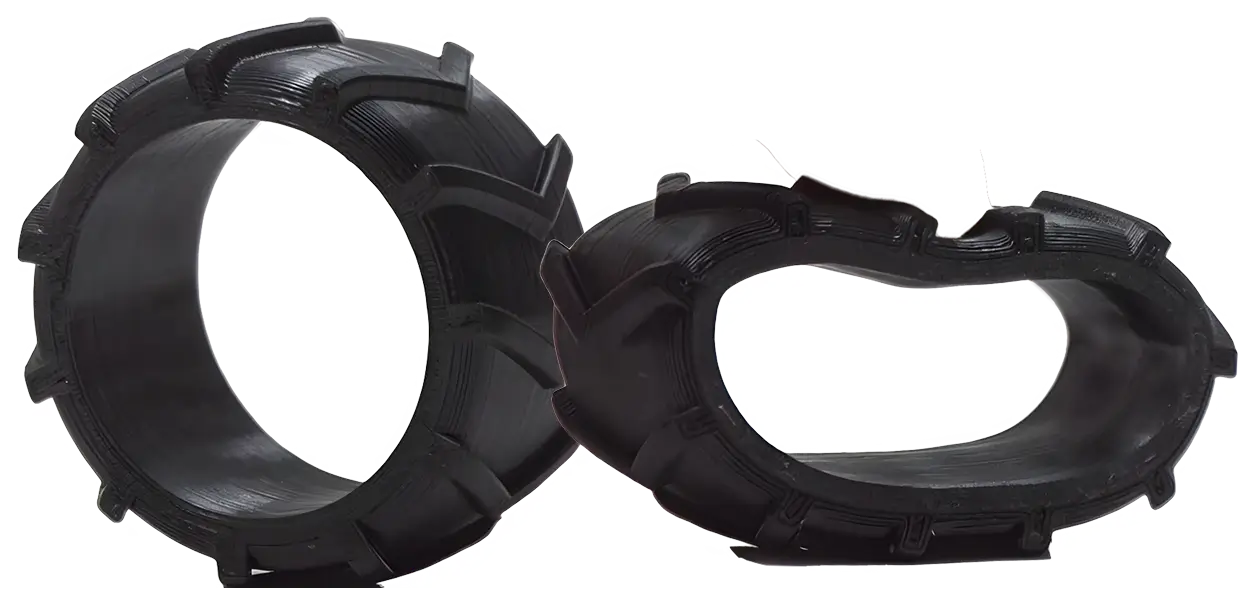
Thermoplastic Polyurethane (TPU)
Polyurethane chains that combine the elasticity of rubber with the strength of engineering plastics
Strength
Flexibility
Durability